

One of America's Most Historic Stadiums

In 1931, it was hailed by then Paterson Mayor John V. Hinchliffe as the stadium its people needed.
As the birthplace of American industrialization, Paterson’s hardworking population was already the home to semi-pro baseball and football, so having its own stadium had been a dream since the 1920’s.
On July 8, 1932, the 10,000-seat stadium opened to the public as part of the city’s Independence Day celebration, although it was days after the actual holiday. The grand opening attracted thousands of local residents and was kicked off by a pageant of 1,500 people.
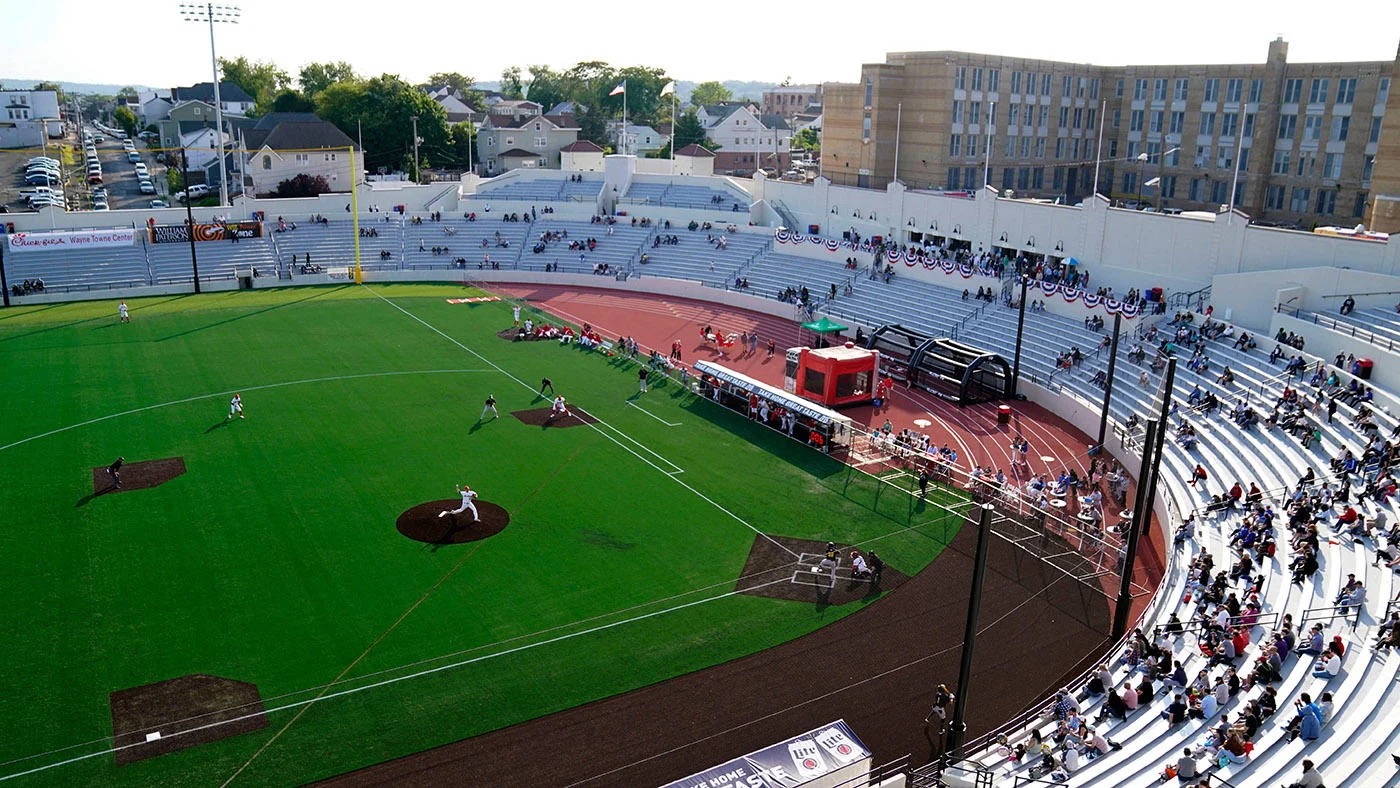
Since its founding, Hinchliffe Stadium has stood stoically perched upon its bluff overlooking its historic city and the Passaic River. Uniquely nestled within Paterson Great Falls National Park, it is also the only sporting venue to hold the title of "stadium in a national park." Hinchliffe Stadium is a rarity among the remaining Negro Leagues baseball parks in the United States, holding the honor of being the first National Historic baseball landmark.
Closed in 1996, Hinchliffe took the next step in its development in 2023 when Paterson native Baye Adofo-Wilson, an U.S. Army veteran, real estate developer, lawyer and owner of BAW Development firm led a $110 million efforts to renovate historic Hinchliffe. The Stadium is currently home to the Frontier League’s NJ Jackals and NY Cosmos of USL.
While the rebirth of Hinchliffe Stadium saw new crowds of admirers and the unveiling of the Charles J. Muth Museum during its relaunch, today's spectators can only dream of the past glory of this stunning palladium.
Building A Legacy
Its construction was the brainchild of then mayor John V. Hinchliffe who in his 1931 budget address stated the community’s need for an arena to house its growing enthusiasm for sports.
Hinchliffe was designed in the Art Deco style of architecture of the time by local architect John Shaw. The Olmstead Brothers, who designed parks from New York’s Central Park to Newark’s Branch Brook Park, also had a hand in the design of the area that would house Hinchliffe Stadium. The Olmstead brothers are credited with creating a plan to develop the area adjacent to the Great Falls National Park for a baseball stadium as part of a project for the Passaic County Parks Commission.
In the end, Hinchliffe was almost perfectly square in its original construction at- 440-feet by 417-feet. Its seating is “horseshoe” shaped similar to the former Polo Grounds in New York, where pioneering Major League Baseball’s New York Giants played.
Serving as mayor from 1929 to 1937, John V. Hinchliffe was heir to the Hinchliffe Brewing empire, which was founded in 1861. The stadium that bore his name was built in the early years of the Great Depression, many local workers, who had been laid off from local mills, served as the workforce that constructed the Stadium. Enhancement to the venue were financed through the federal New Deal program created by then U.S. President Franklin Delano Roosevelt from its inception to 1934. It was during this time that two, historic “high-relief cast stone” accents were designed and placed on the stadium by local sculptor Gaetano Federici, an Italian-born artist who created noteworthy statues of U.S. Congressman James Stewart, as well as bronze likeness of city mayors Nathan Barnert and Thomas McBride outside of City Hall.
Golden Years
Currently one of the few remaining stadiums in the country associated with Negro League baseball, once Hinchliffe Stadium was built, it became an immediate star and the people immediately filled its seats.
In its first year, Hinchliffe rose from obscurity to greatness. It hosted various barnstorming baseball games, which were popular at the time and was the site of a game marketed as “the Colored Championship of the Nation” in 1933, pitting the Philadelphia Stars against the New York Black Yankees. Despite the loss, the Black Yankees brought their winning ways to Paterson and claimed the new ball park as its home field.
Hinchliffe also hosted another high-powered Negro League team – the New York Cubans, which played in the ballpark in 1935 and 1936. In that final season, the Cubans lost their season opener to the Pittsburgh Crawfords, 19-6, but in doing so, put the national spotlight on Paterson. The stadium continued to be seen as an enclave for Negro League baseball. Hinchliffe Stadium routinely was the host to many of baseball’s Black super stars including: Monte Irvin, of nearby Orange, N.J., as well as home run king Josh Gibson, James Thomas “Cool Papa” Bell, Oscar Charleston and other greats of the segregated era.
As time marched on, Hinchliffe attracted more than baseball. The stadium also hosted for boxing events like the “Diamond Gloves,” (a precursor to the Golden Gloves). Local pugilist, Lou Duva, a Bantam weight division boxer won his championship at Hinchliffe in 1940. During what would become the War Years, Paterson native Lou Costello, a friend of Duva’s and boxing fan, was often seen at Diamond Glove matches in his hometown. Matches at the stadium even attracted celebrity judges like former champions Jack Dempsey and Joe Louis in 1943 and 1949, respectively. In 1946, the Stadium became a part of sports history as the site for the first telecast of an athletic event in the state.
Hinchliffe was the host for all types of gatherings in those days, serving as the site for everything from union rallies to those for Victory Bonds supporting war efforts. The venue attracted many famous celebrities from Hollywood and across the country. Costello, who was one half of one of the biggest comedy teams in history, even played his hometown stadium along with his partner Bud Abbott.
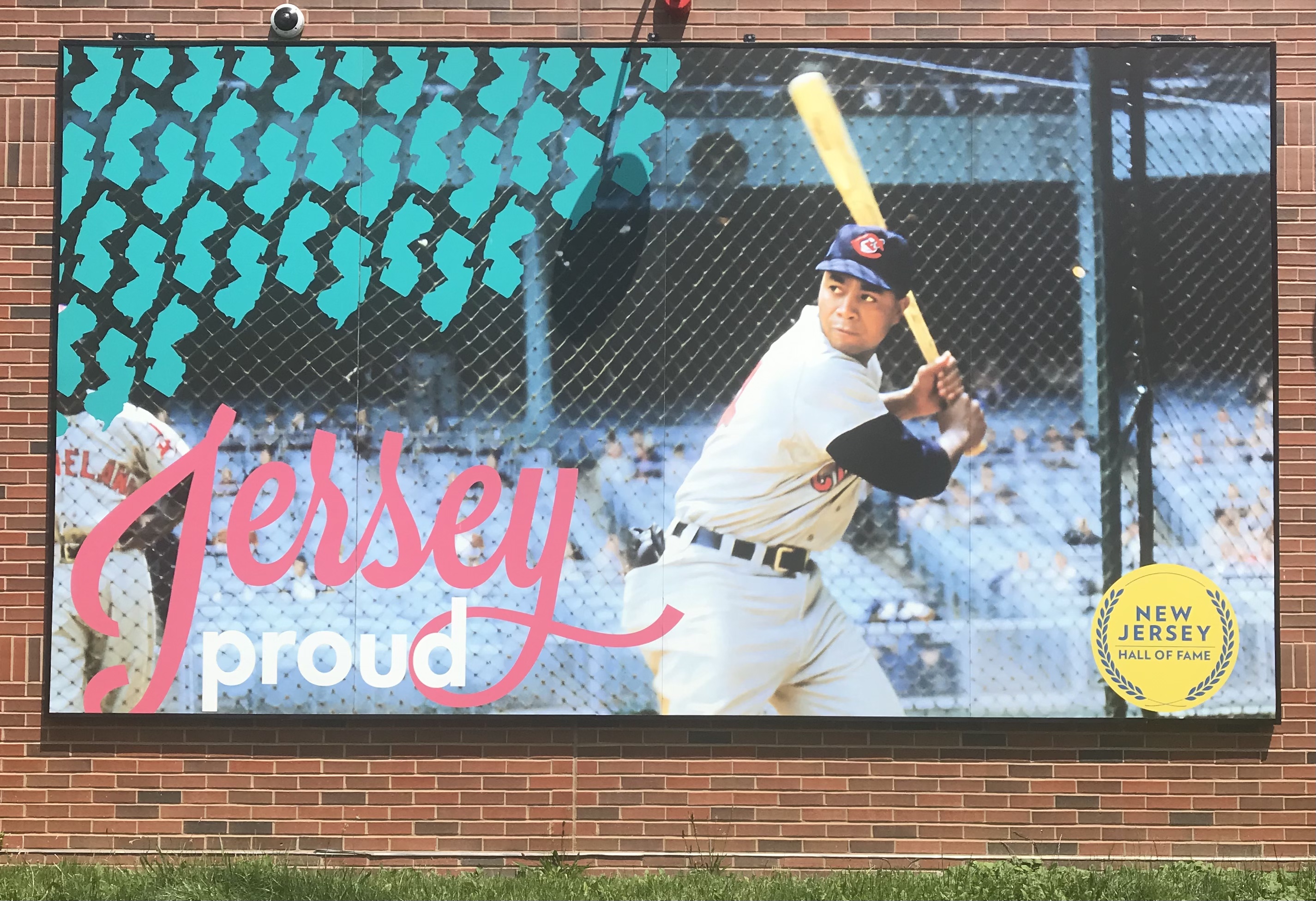
In 1942 the venue was used as a tryout space for the Newark Eagles and it attracted a gifted new Eastside High School graduate and Paterson resident named, Larry Doby. Doby made the ball club and played with the big team under an alias to protect his amateur status. He went on to star at Long Island University and Virginia Union before being drafted in WWII in 1943.
After World War II, native son, Larry Doby, returned to the Newark Eagles, who went on to win the Negro League World Championship that year. Doby went on to break the color barrier in the American League by joining the Cleveland Indians as its first Black player on July 5, 1947. The Paterson raised Doby continued to blaze trails for racial equality by being the first Black player to win a World Series in 1948 and hit a home run in the Fall Classic. He went on to be named to the National Baseball Hall of Fame in 1998; served as baseball’s second Black skipper as manager of the Chicago White Sox.
As segregation ended, Hinchliffe’s usage as a mostly baseball venue faded In the decades following the end of World War II, the venue hosted other events including auto racing and stock car racing. It also became a primary site for the fad of midget car racing and some professional football. In the interim, Hinchliffe never lost sight of it’s primary use, which was to serve the citizens. The Stadium's primary use was always a venue for Paterson high school sports. Following a period where the venue was used by neighboring Clifton Township for high school football in the 1940’s, Paterson Eastside High School and the former Central High School shared use of the historic venue into the 1960’s.
After John F. Kennedy High School opened in 1965, the Stadium became the host of the city’s annual Thanksgiving Day football game. There was a period of abandonment and neglect that marked the landmark in the 1990’s, with the site formally closing in 1996. With its recent renovation and re-opening in 2023, the rivalry and holiday game has returned to Hinchliffe.
Rebirth
Renovations to Hinchliffe Stadium began in 2009, when then President Barack Obama signed the Omnibus Public Lands Management Act, which included a mandate to investigate and assess the sports venue as an official National Historic Landmark
In March of 2013, Hinchliffe Stadium was designated a national historic landmark by the National Park Service. By May it was named a Paterson Historic Landmark and became a part of the Paterson Great Falls National Historic Park the next year following a vote from the U.S. Congress. It is the only sports venue in the National Park System and the first National Historic Landmark that honors baseball.
National historic sites like Hinchliffe Stadium, home to the former New York Black Yankees, New York Cubans, and Newark Eagles. Hinchliffe, along with Rickwood Field in Birmingham, Alabama, home of the former Birmingham Black Barons, are two of a short list of former Negro League parks that still exist and where baseball can still be played.
Baseball returned to Hinchliffe Stadium May of 2023 when The New Jersey Jackals of the Frontier League signed a lease to play their home games a-top the Falls.
The next year, Adofo-Wilson, formerly Deputy Mayor and Director of Economic and Housing Development in Newark, NJ, Adofo-Wilson helped transition Newark’s Bears-Eagles Riverfront stadium to affordable housing and saw the rebirth of Hinchliffe as a way to bring a spirit of rebirth to his hometown.

Adofo-Wilson and his BAW Development firm led a $110 million efforts to renovate historic Hinchliffe. As part of the 2023 redevelopment project, the Stadium gained 75 units of affordable senior housing and an adjoining 313-space parking garage. In addition, a new 5,200-square-foot child-care facility for pre-school aged children was added.
The renovation also featured a partnership with Montclair State University that produced The Charles J. Muth Museum of Hinchliffe Stadium. The museum, which is dedicated to the Negro leagues, is located just past the Stadium entrance. The stunning museum is a beautiful historic space that promotes the memory of the arena’s Negro League roots, as well as the past of Paterson sports greats. The interactive space is the product of a partnership with Montclair State University and the Muth family. It is a testament to Paterson’s glorious past, Negro League Baseball and all sporting events seen at Hinchliffe Stadium.
Hinchliffe Stadium is currently home to the Frontier League’s New Jersey Jackals, the USL’s New York Cosmos soccer club and Jersey Shore Wave Women’s Football club. The stadium's primary user is the Paterson Board of Education, where it serves as a multipurpose facility for the city's two high schools, Eastside High and John F. Kennedy High School.
Latest Articles

Get Updates about all the latest Games & Events


